Why Choose 3M Window Tint?

With dozens of window tint brands on the market, why do professional shops — and informed consumers — consistently choose 3M? It comes down to engineering, warranty, and a track record that spans decades.

A Brief History of 3M in Window Film

3M (Minnesota Mining and Manufacturing) has been developing film technology since the 1960s. They pioneered many of the core technologies used in modern window films, including multilayer optical film, nano-ceramic particle integration, and colour-stable carbon formulations. When other brands launched their versions of “ceramic” or “carbon” films, they were following paths 3M had already established.

Today, 3M’s automotive division supplies window film to dealerships, fleet operators, and professional installers worldwide. Their films are manufactured in climate-controlled facilities with tolerances measured in microns.

What Makes 3M Different from Cheaper Brands?

Engineering and Materials

Budget tint brands use basic dyed polyester films. The dye absorbs light (creating the dark appearance) but breaks down under UV exposure — hence the inevitable purple fading. 3M’s films use fundamentally different technology: nano-carbon particles (Colour Stable), ceramic particles (Ceramic IR), or multilayer optical films (Crystalline) that filter light through physical structure rather than dyes.

The Lifetime Warranty

3M provides a lifetime manufacturer’s warranty on all three of their automotive film grades. This covers bubbling, peeling, cracking, demetallizing, and colour change. Most budget brands offer 1-3 year warranties — and many don’t honor them. 3M’s warranty is backed by a company with $35 billion in annual revenue. They’re not going anywhere.

Non-Metallized Construction

Older window films used metal layers to reflect heat. While effective, metallic films interfere with cell signals, GPS, Bluetooth, satellite radio, toll transponders, and increasingly, ADAS sensors (lane departure, collision avoidance). All three 3M automotive grades are completely non-metallized — zero signal interference.

Consistency

Every roll of 3M film meets the same specifications, every time. The VLT is accurate, the colour is consistent, and the performance matches the datasheet. With budget brands, you might get a 35% VLT film that actually measures 28% — a difference that could put you on the wrong side of Alberta’s tint laws.

The Three 3M Automotive Grades

3M Carbon (Colour Stable)

The entry point to professional-grade tint. Uses nano-carbon technology for durability and colour stability. Starting at $299 for 2 front windows.

3M Ceramic IR

Our most popular film. Advanced ceramic particle technology for superior heat rejection. Starting at $349 for 2 front windows.

3M Crystalline

The pinnacle. Over 200 layers of optical film for maximum heat rejection with near-clear appearance. Starting at $599 for 2 front windows.

Compare all three in detail on our tint comparison page, or view current pricing.

What is Window Tinting, Really?

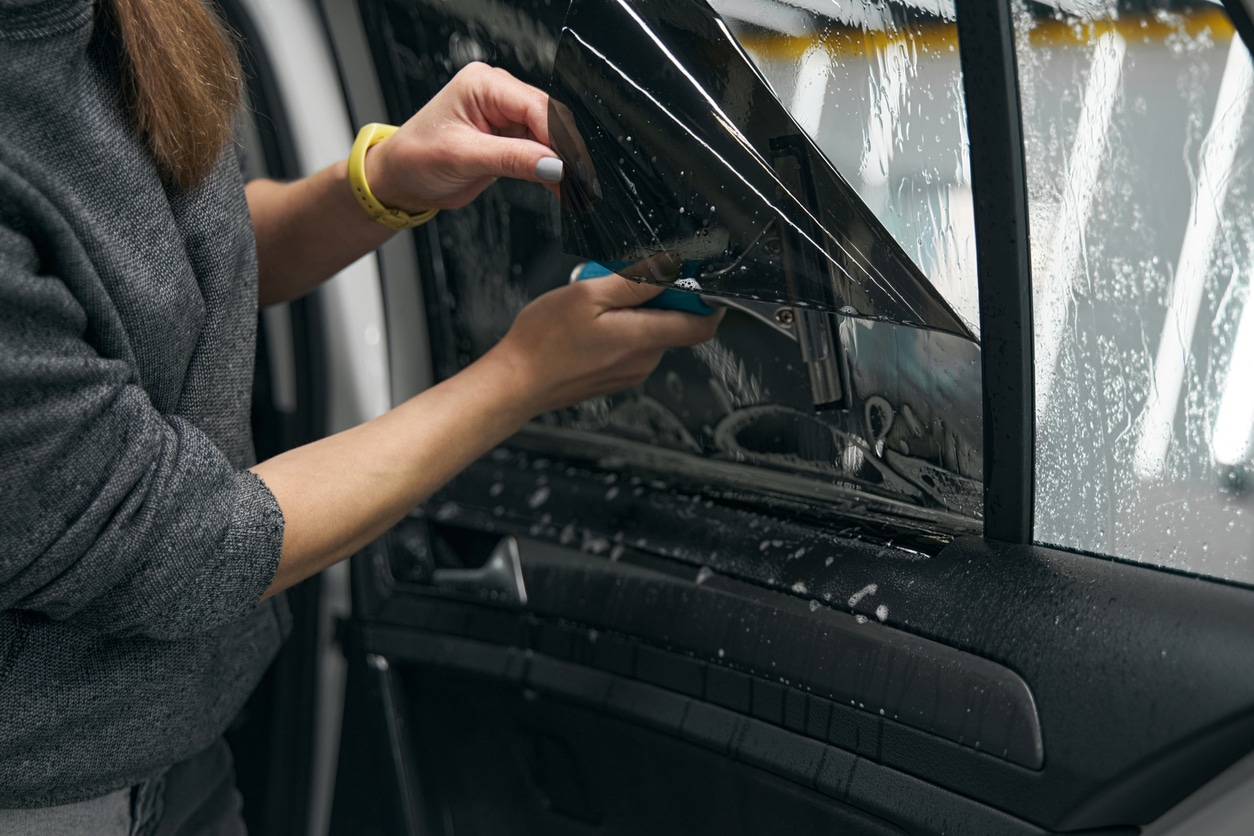
For those new to the topic: automotive window tinting is the application of a thin, transparent film to the interior surface of your vehicle’s glass. The film is precision-cut to match each window’s shape and adhered using a pressure-sensitive adhesive. Once cured, the film becomes a permanent part of the glass that provides UV protection, heat rejection, glare reduction, and privacy.

Modern window films are a far cry from the cheap, bubbling tints of the 1990s. Today’s premium films like 3M’s lineup are virtually invisible on the glass, don’t interfere with electronics, and last the lifetime of the vehicle. Learn more about the benefits of window tinting.

Why Pro Window Tinting Chose 3M

We’ve been installing window tint in Calgary for years, and we’ve worked with multiple film brands. We chose to exclusively carry 3M because it’s the product we’d put on our own vehicles. The quality is consistent, the warranty is ironclad, and our customers stay satisfied for years after installation. Contact us to experience the 3M difference.

3M’s History in Window Film Innovation

3M did not just enter the window film market — they created it. In the 1960s, 3M engineers developed the first commercial window films for architectural use, applying their expertise in adhesives and thin-film technology to solve the problem of solar heat gain in buildings. By the 1970s, they had adapted this technology for automotive applications, and they have been at the forefront of film innovation ever since.

Today, 3M holds more patents in window film technology than any other manufacturer. Their Crystalline series alone represents a decade of research and development in multi-layer optical film technology. This level of investment in R&D is why 3M films consistently outperform competitors in independent testing — they are not simply rebranding generic films from overseas factories, but designing and manufacturing proprietary products in their own facilities.

3M Warranty: What It Actually Covers

The 3M manufacturer warranty is one of the strongest in the industry, but many drivers do not fully understand what it includes. When installed by a certified dealer like Pro Window Tinting, 3M automotive window films carry a warranty for as long as you own the vehicle. This covers defects in materials and workmanship including bubbling, peeling, cracking, delamination, and color change (purpling).

What makes this warranty particularly valuable is that it is backed by 3M — a Fortune 500 company that has been in business for over 120 years. Unlike a shop warranty that depends on the business remaining open, 3M’s warranty is honored at any authorized dealer across North America. If you move from Calgary to Toronto or even to the United States, your warranty follows you. If you sell the vehicle, the remaining warranty can transfer to the new owner, which can be a selling point that adds value to your car.

Comparing 3M to Other Premium Brands

3M is not the only quality window film manufacturer. XPEL, LLumar (Eastman), and SunTek also produce high-quality products. So why do we install 3M exclusively at Pro Window Tinting?

First, product depth. 3M offers a complete range from entry-level carbon (Colour Stable) through mid-range ceramic (Ceramic IR) to premium nano-ceramic (Crystalline). This means we can match the right product to every budget without compromising on quality at any price point. Second, consistency. Because 3M manufactures their films in-house rather than sourcing from third-party factories, quality control is tighter and batch-to-batch variation is minimal. Third, availability. As one of the largest film manufacturers in the world, 3M maintains robust supply chains. We have never had to delay a customer’s installation because of product availability issues.

For a detailed breakdown, visit our brand comparison page where we compare 3M head-to-head against XPEL, LLumar, and other popular brands on performance, warranty, and pricing.

Why Calgary Drivers Specifically Benefit From 3M

Our city’s combination of high altitude, intense UV, extreme temperature ranges, and long sunny days creates an environment that quickly exposes inferior film products. 3M films are engineered for exactly these conditions. The adhesive systems maintain their bond from -40°C to +80°C glass surface temperatures. The nano-ceramic and multi-layer optical technologies do not degrade under prolonged UV exposure. And the scratch-resistant coatings withstand the inevitable contact with ice scrapers and winter maintenance.

After installing thousands of 3M films across Calgary, we can say with confidence that the warranty claim rate is extraordinarily low. The product simply performs as advertised, year after year, in one of the most demanding climates in North America.

Experience the 3M difference for yourself. View our packages or call (403) 891-5980 to schedule your installation.
Related Articles

How Long Does Window Tint Last?

The lifespan of your window tint depends almost entirely on two factors: the quality of the film and the quality of the installation. Here’s what to expect:

  • Cheap dyed films: 2-5 years before fading, bubbling, or turning purple
  • Mid-range carbon films: 5-10 years with proper care
  • Premium films (3M Carbon, Ceramic IR, Crystalline): 15-25+ years — effectively the lifetime of your vehicle

All 3M automotive films come with a lifetime manufacturer’s warranty, which tells you how confident 3M is in their product’s longevity.

How to Clean Tinted Windows

Proper cleaning is the most important thing you can do to maintain your tint. The wrong products or technique can scratch, haze, or degrade the film.

What to Use

  • Ammonia-free glass cleaner — this is non-negotiable. Ammonia (found in Windex and many household glass cleaners) degrades window film adhesive and causes discoloration over time.
  • Microfiber cloths — soft, lint-free, and non-abrasive. Use one damp cloth for cleaning and a dry one for buffing.
  • Simple soap and water — a mild dish soap solution works perfectly and costs nothing.

What to Avoid

  • Ammonia-based cleaners (Windex, most blue glass cleaners)
  • Paper towels — surprisingly abrasive on film surfaces
  • Abrasive scrubbing pads — will scratch the film
  • Razor blades or scrapers — will cut through the film

Cleaning Technique

Spray the cleaner directly onto the microfiber cloth (not the window) to avoid excess liquid running into the door seals where it can affect the film edges. Wipe in straight, overlapping strokes rather than circular motions. Buff dry with a second clean microfiber cloth.

The First Week After Installation

The most critical period for your new tint is the first 3-7 days while the adhesive cures. During this time:

  • Don’t roll down your windows — keep them up for at least 3-5 days to avoid peeling the edges
  • Don’t clean the interior glass — wait a full week before cleaning tinted surfaces
  • Don’t worry about water bubbles — small hazy spots or bubbles are normal during curing and will disappear on their own
  • Don’t poke at the film — avoid pressing on or touching the tinted surface

In Calgary’s colder months, curing takes longer — up to 2-3 weeks in winter. Be patient and the results will be worth it.

Protecting Your Tint in Calgary’s Winter

Calgary’s extreme temperature swings and dry winters require some extra attention:

Ice and Frost Removal

Never use a metal ice scraper on the interior of your windshield or windows. If frost forms on the inside of your tinted glass, use your vehicle’s defroster or gently wipe with a soft cloth. The defroster lines on your rear windshield work over (not under) the tint film, so they function normally.

Temperature Cycling

Quality films like 3M’s lineup are engineered to handle extreme temperature ranges without adhesive failure. Cheap films may delaminate during Calgary’s temperature swings (from -30°C to +5°C in a single chinook event). This is another reason to invest in quality from the start.

Static and Dry Air

Calgary’s dry winter air creates static, which attracts dust to glass surfaces. Regular cleaning with an anti-static microfiber cloth keeps tinted windows looking clean.

Signs Your Tint Needs Attention

Even quality tint can occasionally need repair. Watch for these warning signs:

Edge Peeling

If the film starts lifting at the edges, it’s usually due to the adhesive being compromised — often from ammonia-based cleaners or the film being physically disturbed before it fully cured. Small edge peels can sometimes be repaired; larger ones may require re-tinting that window.

Bubbling

Bubbles that appear months or years after installation indicate adhesive failure. In quality films this is extremely rare and would be covered under warranty. In cheap films, it’s inevitable.

Scratching

Surface scratches from rings, seatbelt buckles, or improper cleaning are cosmetic but can’t be buffed out. Some premium films have scratch-resistant coatings — another advantage of quality film.

Color Change

If your tint is turning purple, it’s a dyed film that’s breaking down under UV exposure. 3M’s carbon and ceramic films are specifically engineered to never change color. If you’re seeing purple, it’s time to replace with a quality product.

How Long Does Window Tinting Take to Install?

Professional installation typically takes:

  • 2 front windows: 45 minutes to 1 hour
  • Full vehicle (all sides + rear): 2-3 hours
  • Full vehicle + windshield: 3-4 hours

Most installations can be completed while you wait, or you can drop your vehicle off in the morning and pick it up in the afternoon.

Maximizing Your Tint’s Lifespan

The formula for long-lasting tint is simple: start with quality film, get it professionally installed, clean it properly, and avoid ammonia-based products. Follow these guidelines and your 3M tint will look as good in year 15 as it did on day one.

Ready for tint that lasts? Check out our current pricing on 3M films — all backed by a lifetime warranty.

Related Articles

Alberta Window Tint Laws: What You Need to Know

Before getting your windows tinted in Calgary, it’s important to understand Alberta’s window tinting regulations. Getting the wrong shade on the wrong window can result in a traffic ticket and the cost of having the tint removed. Here’s everything you need to know about what’s legal in Alberta.

Current Alberta Window Tint Regulations

Alberta’s window tinting laws are governed by the Vehicle Equipment Regulation (AR 122/2009) under the Traffic Safety Act. The regulations specify minimum Visible Light Transmission (VLT) requirements — the percentage of light that must pass through the glass.

Windshield

The windshield must allow a minimum of 70% VLT across its full area. Most factory windshields already sit around 70-75% VLT, so the only practical option for windshield tinting is a nearly clear film like 3M Crystalline or 3M Ceramic IR in the lightest shade. These films reject significant heat and 99% of UV rays while remaining within legal limits. Visit our windshield tinting page for more details.

Front Side Windows (Driver & Passenger)

Front side windows must allow a minimum of 50% VLT. This means you can apply a light tint, but nothing too dark. A 50% VLT film lets half the visible light through — it provides a subtle tinted look while remaining legal.

Rear Side Windows

There is no restriction on rear side window tinting in Alberta. You can go as dark as you like on the rear passenger windows, including full limo tint (5% VLT).

Rear Windshield

Like the rear side windows, there is no restriction on rear windshield tinting. Many drivers choose a darker shade for the back of the vehicle for privacy and heat rejection.

VLT Percentages Explained

VLT (Visible Light Transmission) measures the percentage of visible light that passes through your window. The lower the number, the darker the tint:

  • 70% VLT — Nearly clear, barely noticeable. Legal for windshields.
  • 50% VLT — Light tint, subtle appearance. Maximum darkness for front side windows in Alberta.
  • 35% VLT — Medium tint, noticeable but you can still see through easily. Popular for rear windows.
  • 20% VLT — Dark tint, significant privacy. Common choice for rear windows.
  • 5% VLT — “Limo tint,” very dark. Only legal on rear windows in Alberta.

What Happens If Your Tint Is Too Dark?

If a Calgary police officer or peace officer determines your window tint is too dark on the windshield or front side windows, you can receive a fine. The typical penalty is a traffic ticket, and you may be required to remove the non-compliant tint and have your vehicle re-inspected.

The fine amount varies, but it’s not worth the hassle. Getting your tint done right the first time — within legal limits — saves you money and headaches.

Best Tint for Night Driving in Calgary

One of the most common concerns about window tinting is how it affects night driving visibility. The key is choosing the right VLT for each window position:

  • Windshield: Stick with 70%+ VLT (nearly clear films like 3M Crystalline). These reject heat without reducing night visibility.
  • Front side windows: A 50% VLT tint has minimal impact on night visibility. Most drivers find it comfortable even in Calgary’s dark winter evenings.
  • Rear windows: Darker tints on rear windows don’t significantly affect driving since you primarily look through the windshield and front windows. Side mirrors compensate for reduced rear visibility.

How Dark Should You Go?

Our recommendation for Calgary drivers who want the best balance of appearance, heat rejection, and legal compliance:

  • Front side windows: 50% VLT (maximum legal darkness)
  • Rear side windows: 20-35% VLT (good privacy and heat rejection)
  • Rear windshield: 20-35% VLT (matches the rear sides)
  • Windshield: 3M Ceramic IR or Crystalline in 70%+ VLT for heat rejection without appearance change

When you visit Pro Window Tinting, we’ll walk you through the options and help you choose shades that look great on your vehicle while keeping you fully compliant with Alberta law. Check out our 3M tint grade options or visit our shop page for current pricing.

Medical Exemptions

Alberta does allow darker front window tinting for medical reasons. If you have a documented medical condition that requires additional UV or light protection (such as lupus, photosensitivity, or certain skin conditions), you can apply for a medical exemption. You’ll need a letter from your physician, and the exemption document must be kept in the vehicle at all times.

Frequently Asked Questions About Alberta Tint Laws

Can I get a ticket for tinted windows at a vehicle inspection?

Yes. If your front side windows or windshield tint is below the legal VLT minimum, you will fail an Alberta vehicle inspection and need to have the tint removed before passing.

Do factory-tinted windows count toward the VLT limit?

Yes. The VLT measurement includes the glass itself. Most factory glass is around 70-80% VLT, so any aftermarket film you add reduces the total VLT further. Your installer should measure the combined VLT (glass + film) to ensure compliance.

Are tint laws enforced in Calgary?

Yes. Calgary Police Service and Alberta peace officers do enforce tint laws, particularly during traffic stops and vehicle inspections. They use a light meter to measure VLT on the spot.

Have more questions? Check our window tinting FAQ page or contact us directly — we’re happy to help you navigate Alberta’s tint regulations.

Related Articles