

How Long Does Window Tint Last?
The lifespan of your window tint depends almost entirely on two factors: the quality of the film and the quality of the installation. Here’s what to expect:
- Cheap dyed films: 2-5 years before fading, bubbling, or turning purple
- Mid-range carbon films: 5-10 years with proper care
- Premium films (3M Carbon, Ceramic IR, Crystalline): 15-25+ years — effectively the lifetime of your vehicle
All 3M automotive films come with a lifetime manufacturer’s warranty, which tells you how confident 3M is in their product’s longevity.
How to Clean Tinted Windows
Proper cleaning is the most important thing you can do to maintain your tint. The wrong products or technique can scratch, haze, or degrade the film.
What to Use
- Ammonia-free glass cleaner — this is non-negotiable. Ammonia (found in Windex and many household glass cleaners) degrades window film adhesive and causes discoloration over time.
- Microfiber cloths — soft, lint-free, and non-abrasive. Use one damp cloth for cleaning and a dry one for buffing.
- Simple soap and water — a mild dish soap solution works perfectly and costs nothing.
What to Avoid
- Ammonia-based cleaners (Windex, most blue glass cleaners)
- Paper towels — surprisingly abrasive on film surfaces
- Abrasive scrubbing pads — will scratch the film
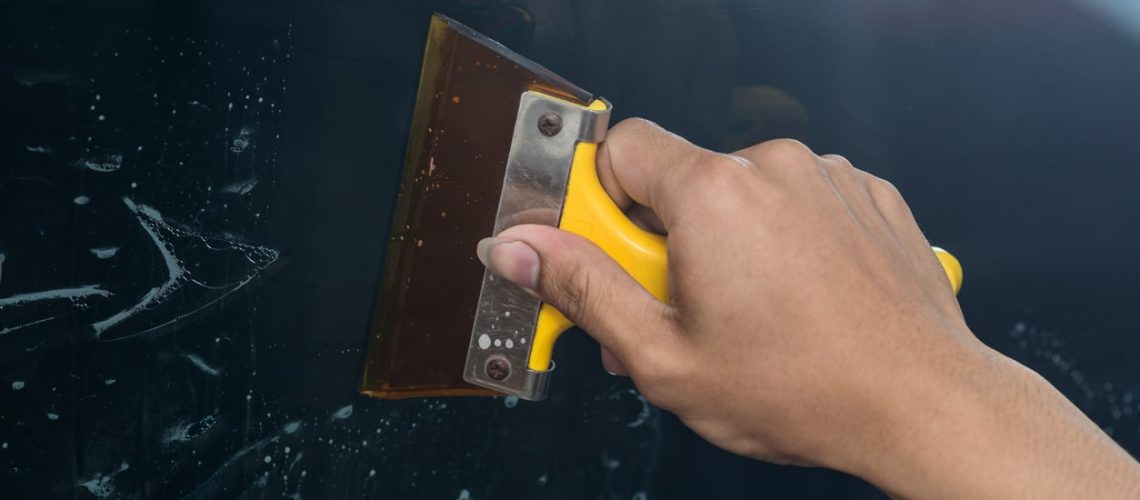
- Razor blades or scrapers — will cut through the film
Cleaning Technique
Spray the cleaner directly onto the microfiber cloth (not the window) to avoid excess liquid running into the door seals where it can affect the film edges. Wipe in straight, overlapping strokes rather than circular motions. Buff dry with a second clean microfiber cloth.
The First Week After Installation
The most critical period for your new tint is the first 3-7 days while the adhesive cures. During this time:
- Don’t roll down your windows — keep them up for at least 3-5 days to avoid peeling the edges
- Don’t clean the interior glass — wait a full week before cleaning tinted surfaces
- Don’t worry about water bubbles — small hazy spots or bubbles are normal during curing and will disappear on their own
- Don’t poke at the film — avoid pressing on or touching the tinted surface
In Calgary’s colder months, curing takes longer — up to 2-3 weeks in winter. Be patient and the results will be worth it.
Protecting Your Tint in Calgary’s Winter
Calgary’s extreme temperature swings and dry winters require some extra attention:
Ice and Frost Removal
Never use a metal ice scraper on the interior of your windshield or windows. If frost forms on the inside of your tinted glass, use your vehicle’s defroster or gently wipe with a soft cloth. The defroster lines on your rear windshield work over (not under) the tint film, so they function normally.
Temperature Cycling
Quality films like 3M’s lineup are engineered to handle extreme temperature ranges without adhesive failure. Cheap films may delaminate during Calgary’s temperature swings (from -30°C to +5°C in a single chinook event). This is another reason to invest in quality from the start.
Static and Dry Air
Calgary’s dry winter air creates static, which attracts dust to glass surfaces. Regular cleaning with an anti-static microfiber cloth keeps tinted windows looking clean.
Signs Your Tint Needs Attention
Even quality tint can occasionally need repair. Watch for these warning signs:
Edge Peeling
If the film starts lifting at the edges, it’s usually due to the adhesive being compromised — often from ammonia-based cleaners or the film being physically disturbed before it fully cured. Small edge peels can sometimes be repaired; larger ones may require re-tinting that window.
Bubbling
Bubbles that appear months or years after installation indicate adhesive failure. In quality films this is extremely rare and would be covered under warranty. In cheap films, it’s inevitable.
Scratching
Surface scratches from rings, seatbelt buckles, or improper cleaning are cosmetic but can’t be buffed out. Some premium films have scratch-resistant coatings — another advantage of quality film.
Color Change
If your tint is turning purple, it’s a dyed film that’s breaking down under UV exposure. 3M’s carbon and ceramic films are specifically engineered to never change color. If you’re seeing purple, it’s time to replace with a quality product.
How Long Does Window Tinting Take to Install?
Professional installation typically takes:
- 2 front windows: 45 minutes to 1 hour
- Full vehicle (all sides + rear): 2-3 hours
- Full vehicle + windshield: 3-4 hours
Most installations can be completed while you wait, or you can drop your vehicle off in the morning and pick it up in the afternoon.
Maximizing Your Tint’s Lifespan
The formula for long-lasting tint is simple: start with quality film, get it professionally installed, clean it properly, and avoid ammonia-based products. Follow these guidelines and your 3M tint will look as good in year 15 as it did on day one.
Ready for tint that lasts? Check out our current pricing on 3M films — all backed by a lifetime warranty.